
Madrid's Galacticos
Inside one of the most controversial and consequential teams ever assembled


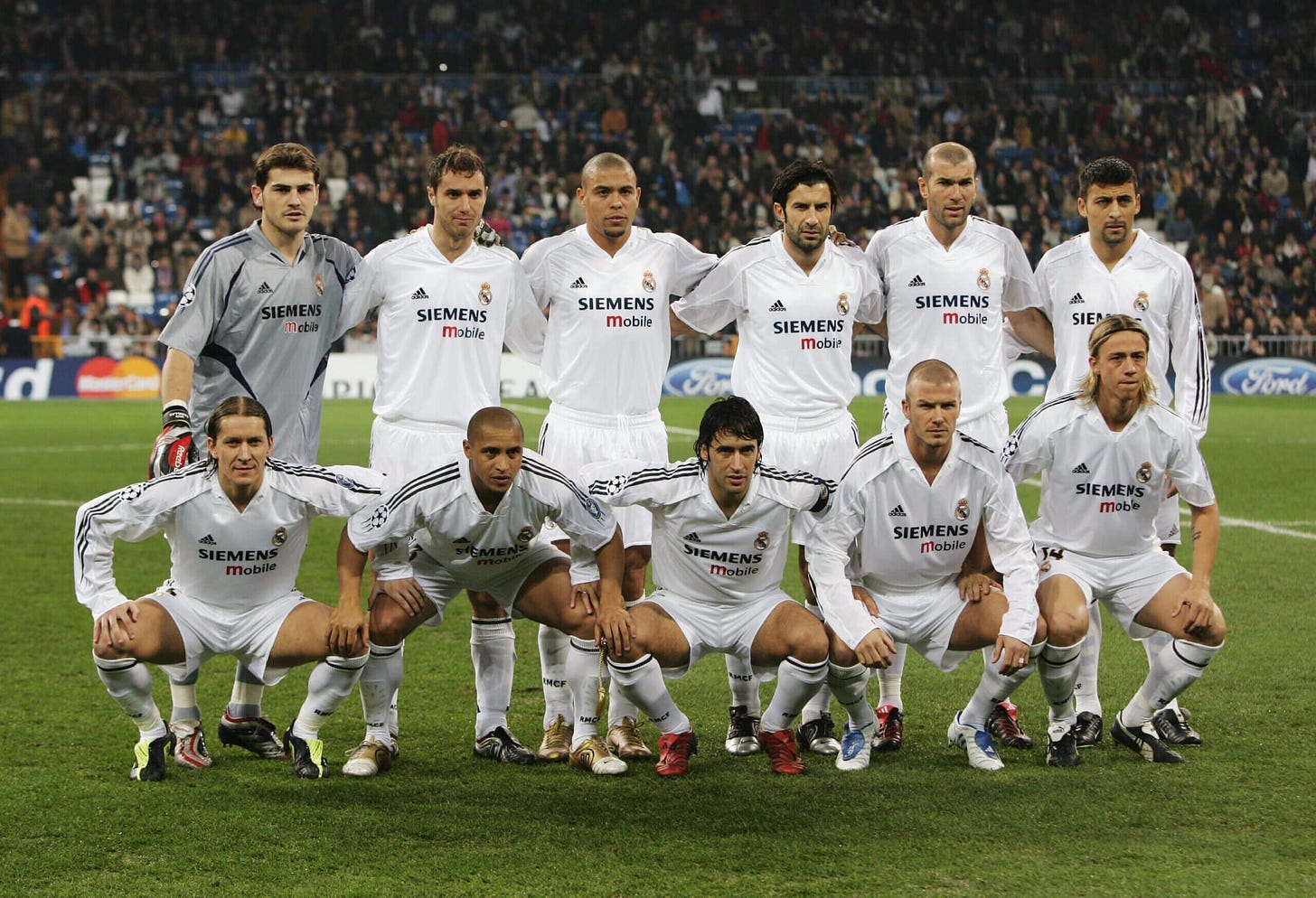
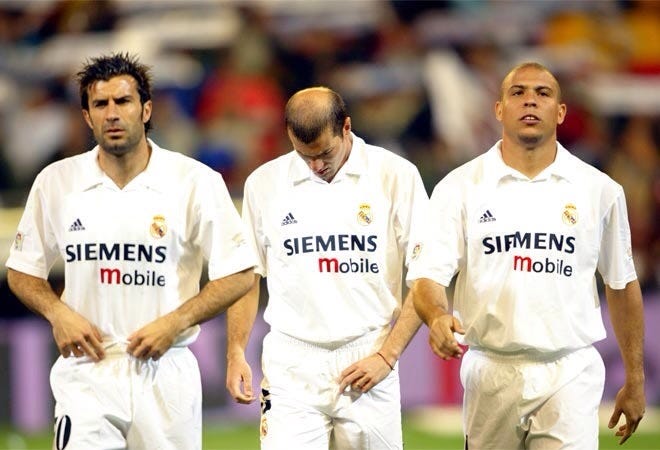
Zidane, Figo, Beckham, Ronaldo, Roberto Carlos — these are household names in the football world, legends who transform our beautiful game. It’s almost impossible to imagine all of them playing together — unless, of course, you witnessed Real Madrid in the early 2000s. In case you haven’t caught on yet, I’m talking about the Galácticos: one of the most iconic and controversial teams in football history.
Galacticos Origins
In early 2000, Real Madrid president Florentino Perez decided to test out a radical new strategy: buy the biggest players in the world and put them all together with little regard for anything else. However, despite what many believe, Perez was not the first person to think of such an idea. Back in the 1950s, then club president, Santiago Bernabéu, initiated the same strategy.
The plan was nicknamed “Galacticos,” which derives from the Spanish word for Galactic, a term sometimes used to refer to footballers deemed to have talent out of this world. Back in the 1950s, Real Madrid signed global superstars like Puskas, Di Stefano, and Kopa in a short time period. The team was successful, but the strategy simply wasn’t sustainable. Following this era, Madrid shifted their approach, placing greater emphasis on the academy and homegrown stars rather than bringing in world-renowned talent. This approach also had success, but eventually those around the club wanted change and gave Perez approval to implement his radical plan.
One key difference between the Galactico plan Real Madrid carried out in the 2000s and the 1950s is the youth academy. During the 2000s, Perez introduced an idea known as “Zidane and the Pavones”. The premise was simple: bring in the world’s best players through transfers (Zidane), while also developing world-class players through the youth system (Pavones). The concept seemed to work as star signings like Zidane and Figo were paired with academy graduates such as Raul and Guti.
Barcelona’s Galacticos?
The Galactico policy was not employed exclusively by Real Madrid. In fact, during the 1990s, it was Barcelona who embraced the philosophy. In Catalonia, this era is referred to as “The Dream Team”. A squad managed by Johan Cruyff, which featured players like Guardiola, Ronald Koeman, Romario, and Laudrup. Though different than Perez’s Galacticos, the underlying idea of bringing in the world’s best talent via transfers remains the same. The “Dream Team” was wildly successful, winning four straight Spanish League Championships and their first European Cup in 1992.
The Team That Changed Everything
Ultimately, Florentino Perez did not invent the Galactico policy, but he carried it out in a way that had never been seen before. No matter your opinion of the Madrid team of the 2000s, there’s no denying their profound impact on football. The Galacticos broke the transfer world record several times, changed perceptions of English players abroad, paved the way for the 2010s Real Madrid team, and ushered in a new commercial era for football. The consequences from the Galacticos ultimately altered the global football landscape forever.
The Emergence of Florentino Perez
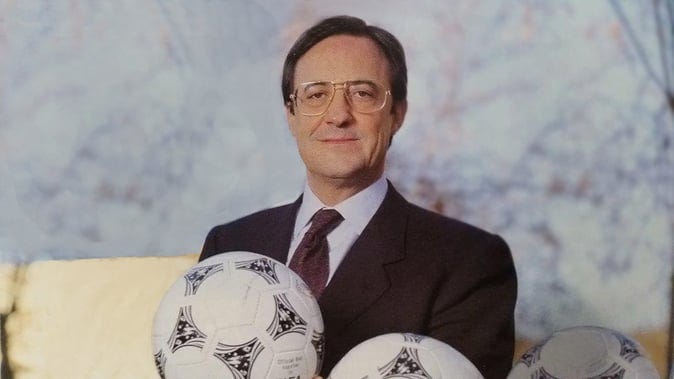
In the year 2000, Real Madrid were fresh off a Champions League title. Despite this, there was a large discontent around the club and those in charge. Many wanted a change due to the large sum of debt Los Blancos had accumulated. The man who promised to solve everything: Florentino Perez.
After graduating from university, a young Florentino Perez got involved in politics and served on Madrid’s city council. Perez made his first run for President of Real Madrid back in 1995, and was defeated by Lorenzo Sanz. He tried again in 2000, demanding change to what he saw as a broken regime. During his 2000 campaign, Florentino Perez made two big promises: first, he would eliminate the large debt, and second, bring the biggest players to the Spanish capital, specifically Luis Figo. Going into the race, Perez was the underdog as an incumbent had never lost. However, voters were intrigued by his promises, and he won the election with 55% of the vote, beating the man he had lost to just five years earlier.
Luis Figo
Almost immediately, Perez fulfilled his promise with the shock signing of Luis Figo from arch rivals Barcelona for a then world record 62 million. To date, the move is one of the most controversial in football history.
The Real Madrid and Barcelona rivalry was at one of its most tense periods in the 2000s. During his return to Camp Nou, Figo was pelted by projectiles from Barcelona supporters. To play for both clubs was unheard yet alone to transfer directly from one to the other. The revolutionary signing of Figo jump-started the Galactico era. It was simply unprecedented to sign the best player in the world from an arch rival. This would be like Madrid getting Messi from Barcelona in 2012. That sounds absurd…because it is. However, that is essentially what Real Madrid did at the time. The Figo signing made it clear from the get-go that the Perez regime meant business.
With the addition of Luís Figo, Real Madrid won La Liga in their first season under the new president. Their new star midfielder was awarded the 2000 Ballon d’Or and the 2001 FIFA World Player of the Year.
2001/2002 Season
In the summer of 2001, Pérez continued his ambitious Galáctico project by signing Zinédine Zidane from Juventus for a then-world record fee of €72 million, shattering Madrid’s own record set the year prior.
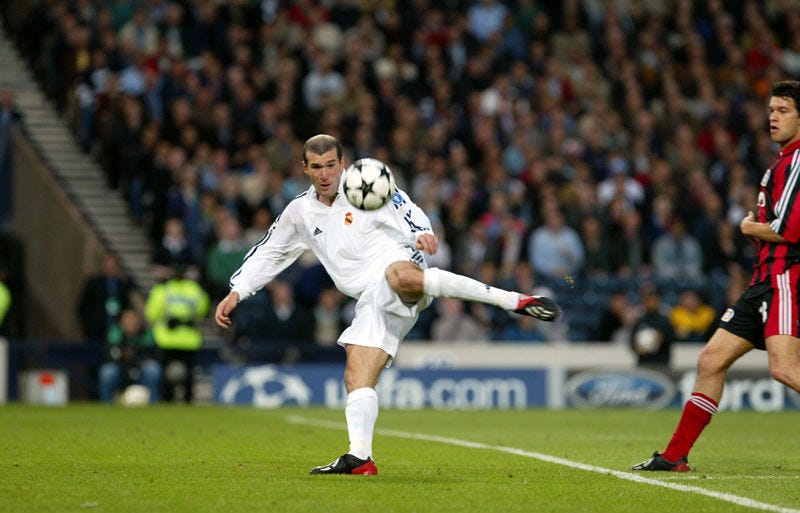
During the 2001/2002 campaign, Madrid went on to win the Champions League with Zidane scoring the winning goal with a now iconic volley. Unlike after the 2000 UCL win, fans were content with the direction of the club. It was clear that Perez’s radical project was working. The signings of Figo and Zidane added to an already talented team featuring Raul, a youth academy graduate, and Roberto Carlos, who had been signed from Inter Milan for €3.5 million in 1996. With the likes of Figo, Zidane, Raul, and Roberto Carlos, Madrid had assembled a super team, yet Perez was just getting started.
2002/2003 Season
In the summer of 2002, Perez had his eyes set on Inter’s Ronaldo (R9). The Brazilian had just finished an incredible World Cup campaign, culminating in victory over France in the final (the infamous R9 haircut World Cup). This made him one of the most coveted transfer targets with Europe’s best teams after his signature. Eventually, in the final hours of the summer transfer window, Real Madrid landed R9 for 45 million euros. This marked the third big signing for Los Blancos in as many summers. With R9, Madrid now had one of the world’s best strikers to lead their line. This signing bolstered an already strong squad, and during the 2002/03 season, Madrid won the Spanish league.
The Unraveling
In 2003, things began to take a turn. This shift is primarily due to two big changes at the club. First, the firing of Vicente Del Bosque, who had managed the club since 1999. This was despite winning the league the season prior. In total, Del Bosque had won 7 trophies with the club and was seen as a calm, effective manager in a squad filled with chaos. The club cited “desiring a new direction” as the reason for the sacking. Second, there were two transfers made in the summer of 2003: the signing of Beckham and the sale of Makaele.
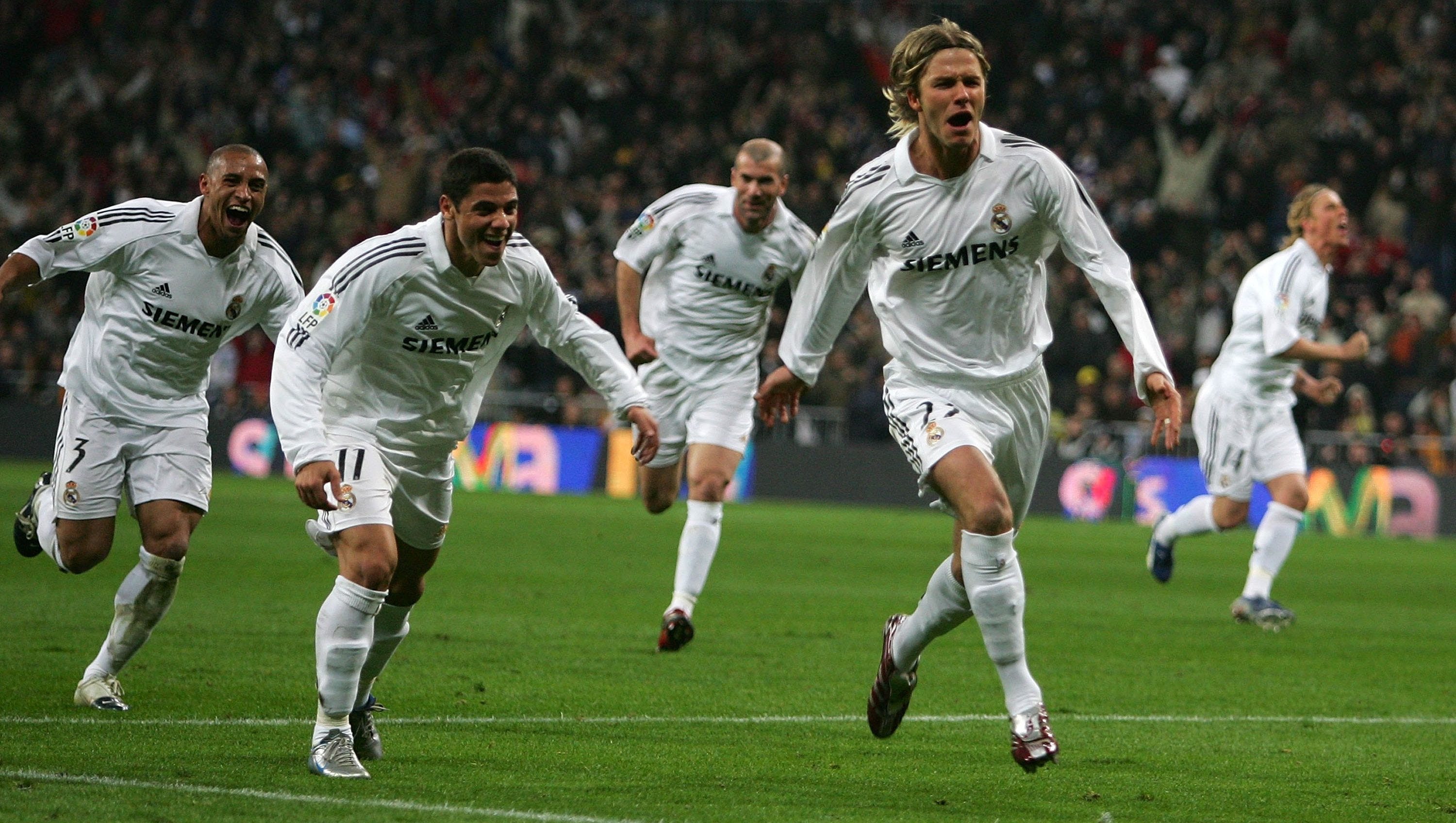
When Beckham arrived from Manchester United, he was not only one of the best players in the world, but massive from a marketing perspective. Following his signing, Real Madrid traveled to Asia in what was one of the most hyped pre-season tours ever. Thousands packed the airports just to catch a glimpse of this super team.
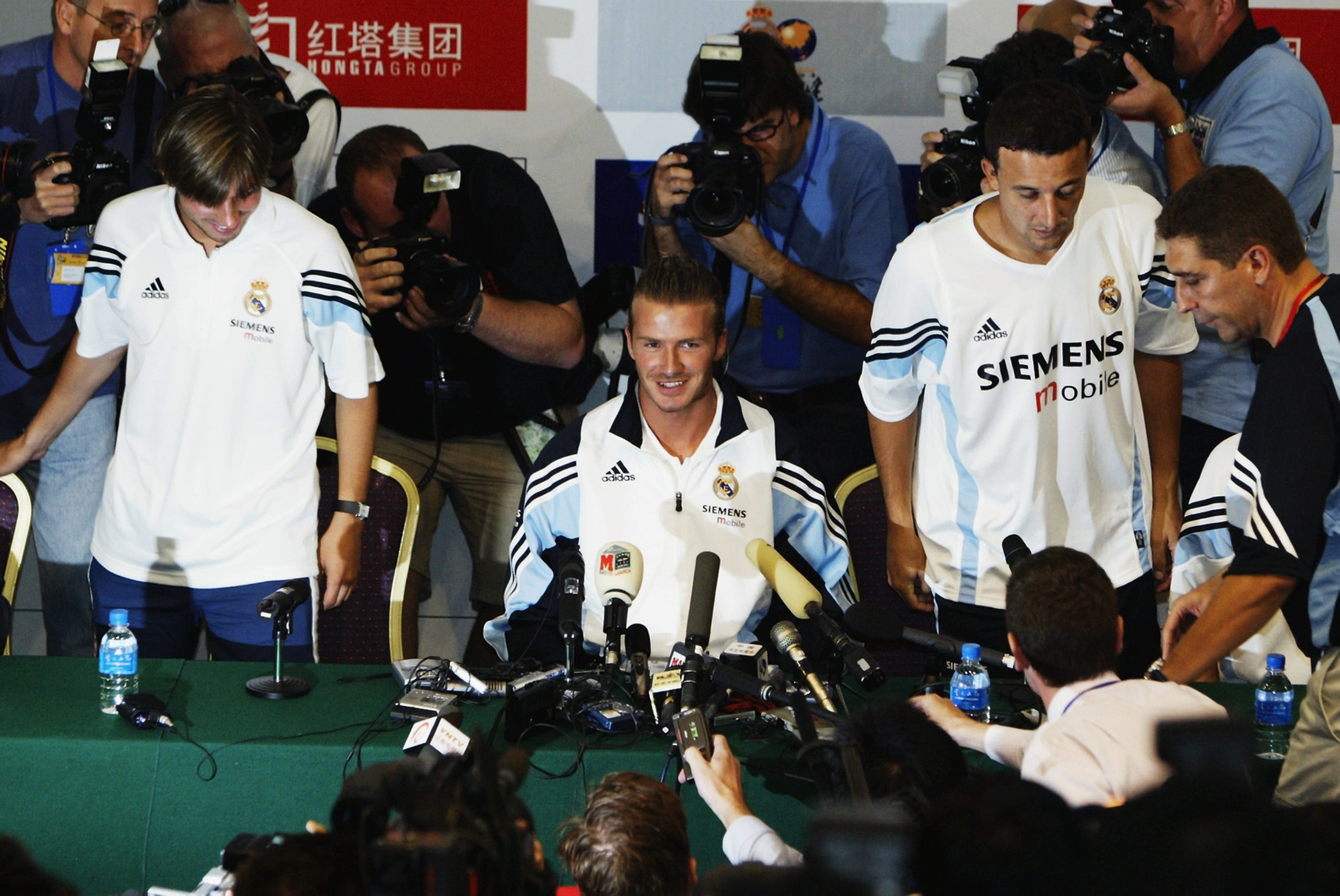
But behind the scenes, things were quietly unravelling. In a team with Ronaldo, Raul, Zidane, Carlos, and Figo, it was the CDM Makelele who was the lynchpin. In the summer of 2003, he was sold to Chelsea, in what is now considered one of Perez’s biggest ever mistakes. When asked about the signing of Beckham and the sale of Makelele, Zidane is credited with the now-infamous line:
“Why put another layer of gold paint on the Bentley when you are losing the entire engine?”
The Downfall
In the 2003/04 season, without their anchor in midfield, Real Madrid struggled as many of the marquee signings did not want to track back. There was also the issue of Beckham coming in when Figo was already the starting right wing. This forced the manager to play the Englishman out of position to fit him into the team.
Following the summer of 2003, it seemed that all logic was abandoned. From then on, it appeared Madrid were motivated by commercial successes rather than trophies. At one point, Perez was alleged to have said:
“We don’t need a coach, the players can manage themselves.”
This highlights his belief that larger than life stars were enough and everything else was irrelevant.
Even after a trophy-less 2003/04 campaign, Perez didn’t fully abandon the Galactico model. In the summer of 2004, he moved to sign Liverpool legend Michael Owen for 9 million in 2004 and Brazilian Robinho for 25 million. Those around the club still believed in what Perez was doing, and he was reelected to the presidency with an astounding 94% of the vote. Despite the decisive election victory, the remainder of Perez’s presidency would turn out to be a disaster.
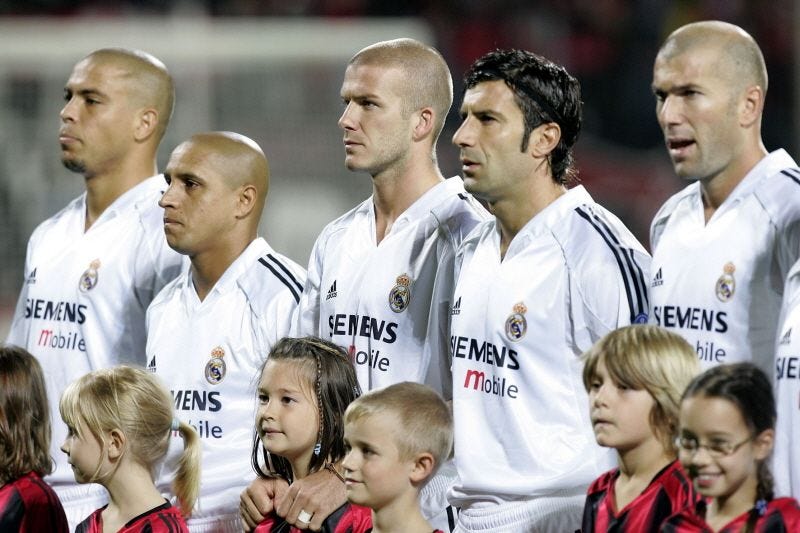
Madrid’s struggles from 2003-2006 can be demonstrated in two key matches, both against Real Zaragoza. In 2004, Real Zaragoza beat the star-studded Real Madrid side in the final 3-2 AET in a match known in Spain as the Galacticidio (Galacticide). The match left a profound effect on Real Madrid and the model the club was running. However, it was even worse in 2006 when Real Zaragoza thrashed Madrid 6-1 in the Copa del Rey semi-final. The hard-working strike force of Diego Milito and Ewerthon cut quite the contrast with the Galacticos, where fading stars such as Ronaldo and Roberto Carlos struggled to keep up.
That 2006 match increased the pressure surrounding Florentino Perez, and just two weeks after that humbling defeat, he resigned. At that point, the Galactico project seemed up in smoke, and the club was a million miles away from winning trophies, which is what Real Madrid is all about. During the second half of Florentino’s tenure (2003-2006), the club had not won a single trophy. This marked the longest title drought in Madrid’s long history.
Galactico Legacy
Assembling some of the greatest players to ever play the game and putting them together seems like a winning formula. While it worked for the first few seasons, thinks quickly deteriorated later on. The Galactico era leaves behind a complicated legacy, one which we fans are still trying to fully understand. The story of Real Madrid in the early 2000s has become increasingly relevant when considering what has been happening around global football today.
A New Galactico Era?
It seems Real Madrid is building a new Galactico team right before our eyes. But with the issues the original Galacticos faced in the past, you have to wonder: Is this really a good idea? The problem with assembling some of the biggest names in world football is that you’re also bringing in some of the biggest egos, which usually causes more problems than it solves.
Galacticos of Today
It really feels like history is repeating itself. Real Madrid have already added elite talent like Jude Bellingham, one of Europe’s most promising centre-backs, in Dean Huijsen, arguably the best attacking fullback in the world in Trent Alexander-Arnold, and the crown jewel, Kylian Mbappe, who, after years of speculation, finally joined from PSG last summer.
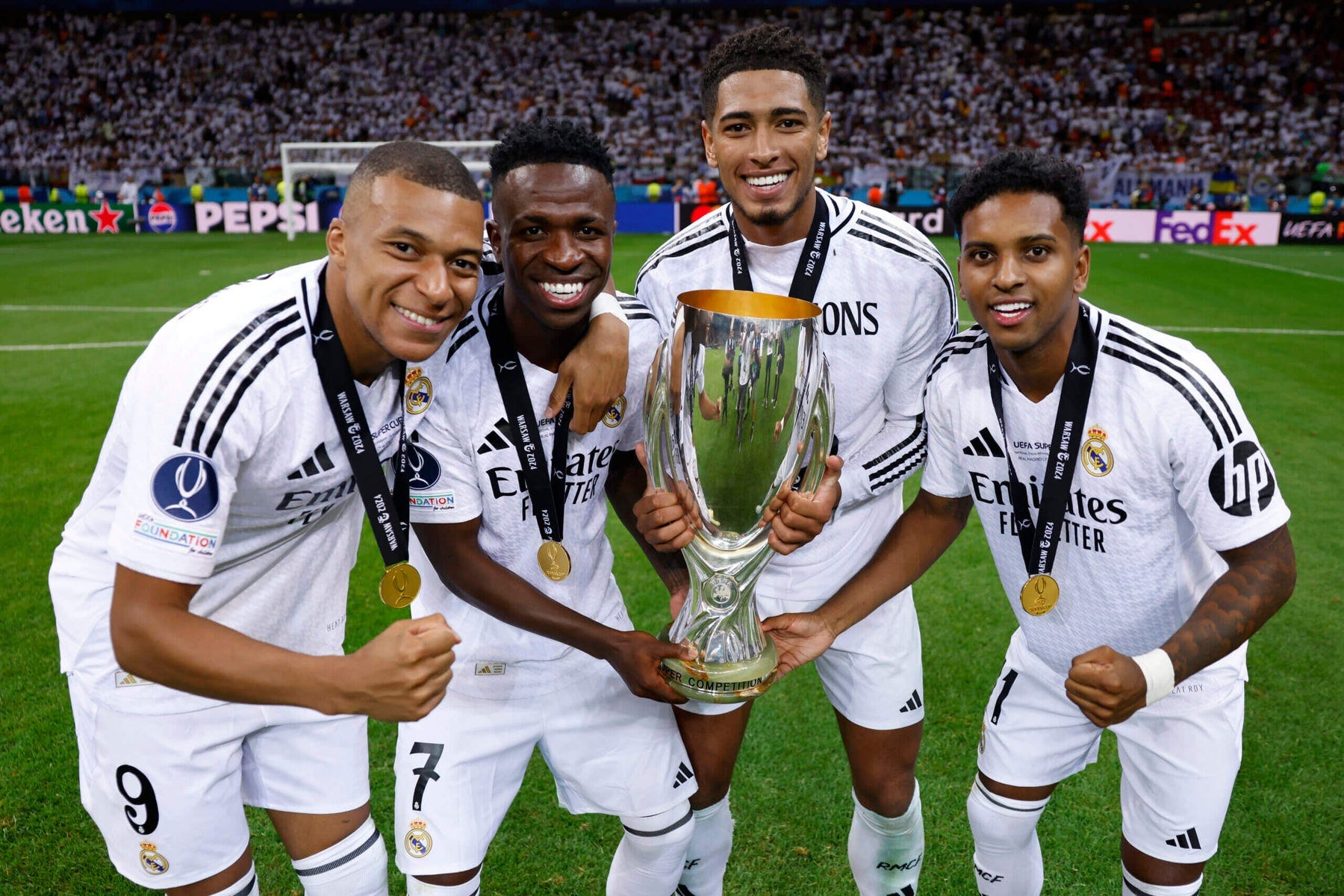
The star man Mbappe has delivered individually, winning La Liga’s Golden Boot in his debut season while also claiming the European Golden Shoe. But even with the Frenchman leading the line, Madrid failed to win a single trophy, especially the one that matters most, the Champions League.
So what went wrong?
Just like the Galactico era of the past, it seems Real Madrid has prioritized star power over balance. Mbappe prefers playing off the left wing, the same position where Vinicius Jr thrives. This is the Beckham/Figo situation all over again, and just like back then, the club was forced to find a way so that the two could co-exist. Madrid pushed Mbappe into his least favorite no.9 position. Though it worked at times, it often felt like trying to fit two players into one position.
It often felt like Vinicius and Mbappe couldn’t shine at the same time, and one needed to fade for the other to thrive. Their profiles don’t seem to complement each other, and their egos repeatedly clashed. This ultimately played a big role in why Real Madrid came up short last season, despite having a dream team on paper.
What Now?
Florentino Perez has clearly not abandoned the Galactico model in 2025 and still believes in his philosophy that the biggest names win the biggest titles. While this model is imperfect, as demonstrated at various points in Real Madrid’s history, it isn’t entirely flawed.
However, for the Galactico policy to truly work, the club needs to learn from its past mistakes and adapt the model into a well-oiled, functional system. Here are some lessons Perez can learn from the failures of his previous presidency:
Don’t sign global superstars just for the sake of it. Bring in players whose profiles actually complement the team. Build a cohesive unit with players who gel with their teammates in terms of play style and mentality.
There must be a clear hierarchy within the squad. Leaders should be established players who can command respect and keep egos in check. In the past, this role belonged to Sergio Ramos, a captain who led Madrid to multiple trophies and maintained order in a star-studded dressing room.
Don’t sign two massive egos who play in the same position. Doing this only creates confusion on the pitch and disrupts the team’s balance. Instead, Madrid should focus on strengthening several key positions within the squad.
As of now, Madrid reportedly has no plans to make additional signings, claiming the squad is “complete.” This seems eerily similar to the 2003 squad, which had no clear holes. One has to wonder if a “complete” squad is good news for Los Blancos… or a disaster waiting to happen? Only time will tell.
 | A guest post by
|
 | A guest post by
|
Very insightful piece.
Hey guys, if anyone is interested in Serie A content drop a follow.
https://substack.com/@federicotomadin